Empire Design
The Imperial Age

The Empire Style

1804–1815 — Bold Classicism & Napoleonic Power

Classical Grandeur for a New Order

Empire style emerged from a profound political rupture. Following the French Revolution and the rise of Napoleon, the delicate refinement of Louis XVI became impossible—even undesirable. In its place arose a bold, architecturally pure form of classicism that drew directly from ancient Rome and Greece. Empire design was about power expressed through clarity, grandeur achieved through geometry rather than decoration, and the assertion of a new political order through the language of classical antiquity.

Also known as Napoleonic style or Continental classicism, the Empire period (1804-1815) was brief but extraordinarily influential. It demonstrated that classical principles could be adapted to express entirely new values: military might, rational order, and the triumph of reason over the seemingly frivolous elegance that preceded it. Yet paradoxically, Empire design achieved a distinctive beauty—not through ornamentation but through the power of pure geometric forms applied with confidence and clarity.

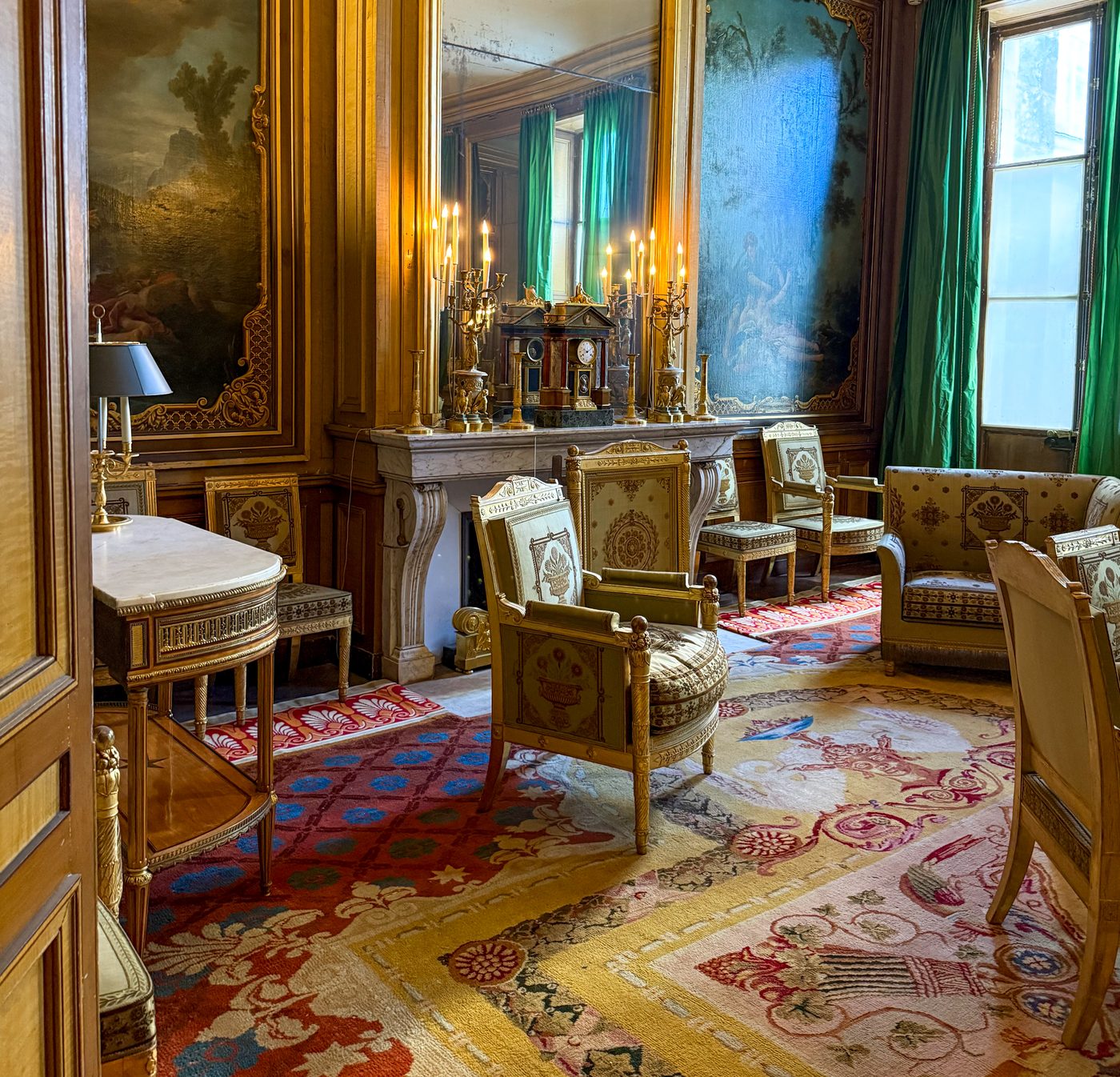
Empire Interior

Revolution, Empire & Classical Ideology

The Revolution of 1789 attempted to erase the ancien régime and its aesthetic values. Royal luxury became morally questionable. Yet the desire for magnificent environments persisted—merely redirected toward the celebration of republican and then imperial values. When Napoleon rose to power and crowned himself Emperor in 1804, he needed an aesthetic vocabulary that expressed authority and permanence. Classical antiquity provided the perfect language: the grandeur of Rome without the taint of royal absolutism.

Designers like Charles Percier and Pierre-François-Léonard Fontaine developed the Empire aesthetic with conscious ideology. They studied ancient Roman architecture and decoration, drawing inspiration from pompeian discoveries. Yet they created something entirely new: a design language that was rigorous, geometric, and fundamentally modern in its clarity. The furniture and interiors they designed for Napoleon's palaces established principles that would influence international design for decades.

Ideological Foundations of the Style

  • Classical antiquity as source of legitimacy and grandeur
  • Geometry and mathematical order as expressions of rational authority
  • Elimination of ornament in favour of structural clarity
  • Integration of military and imperial symbolism
  • Furniture as architectural statements rather than decorative objects

Furniture & Architectural Forms

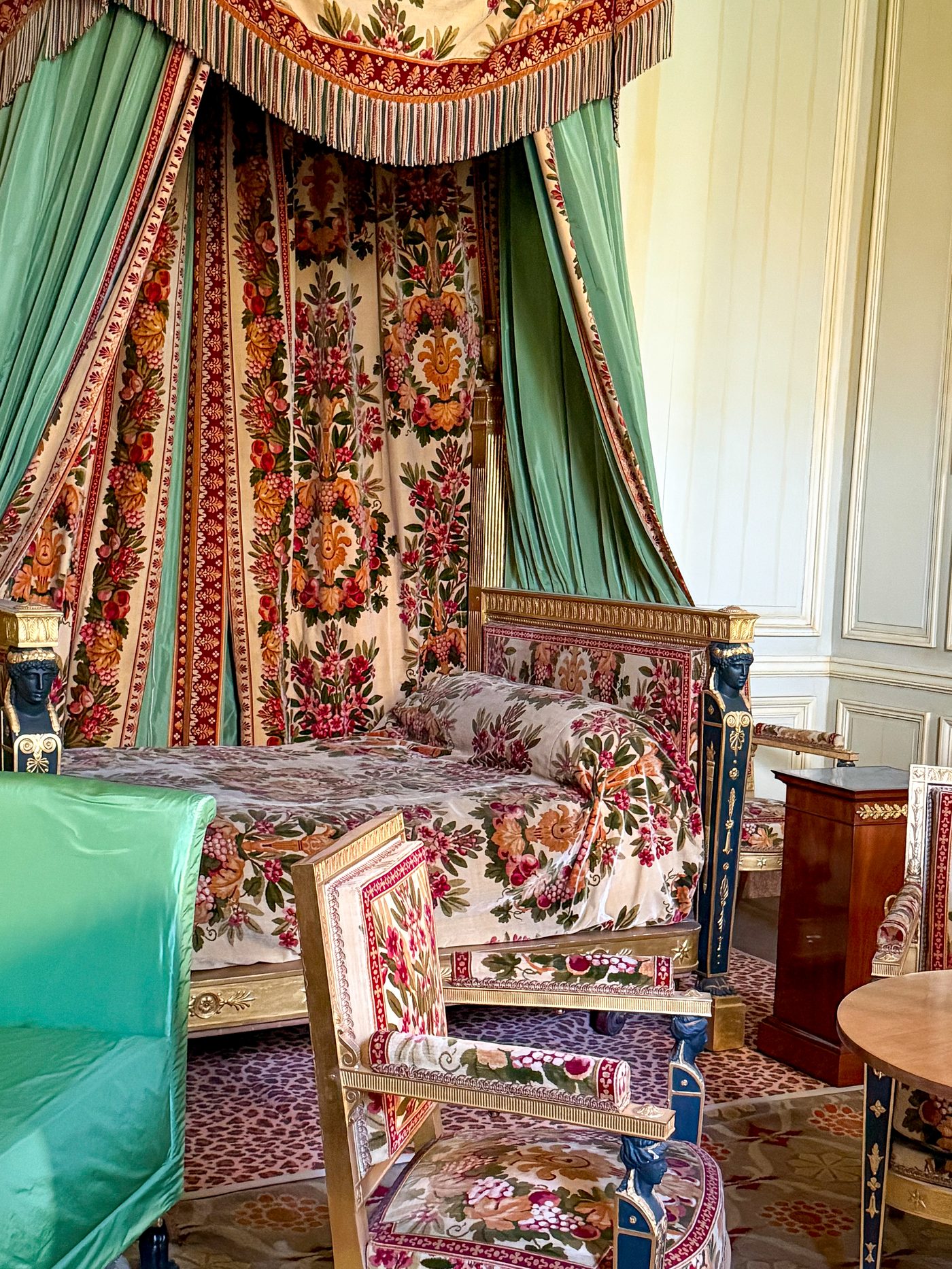
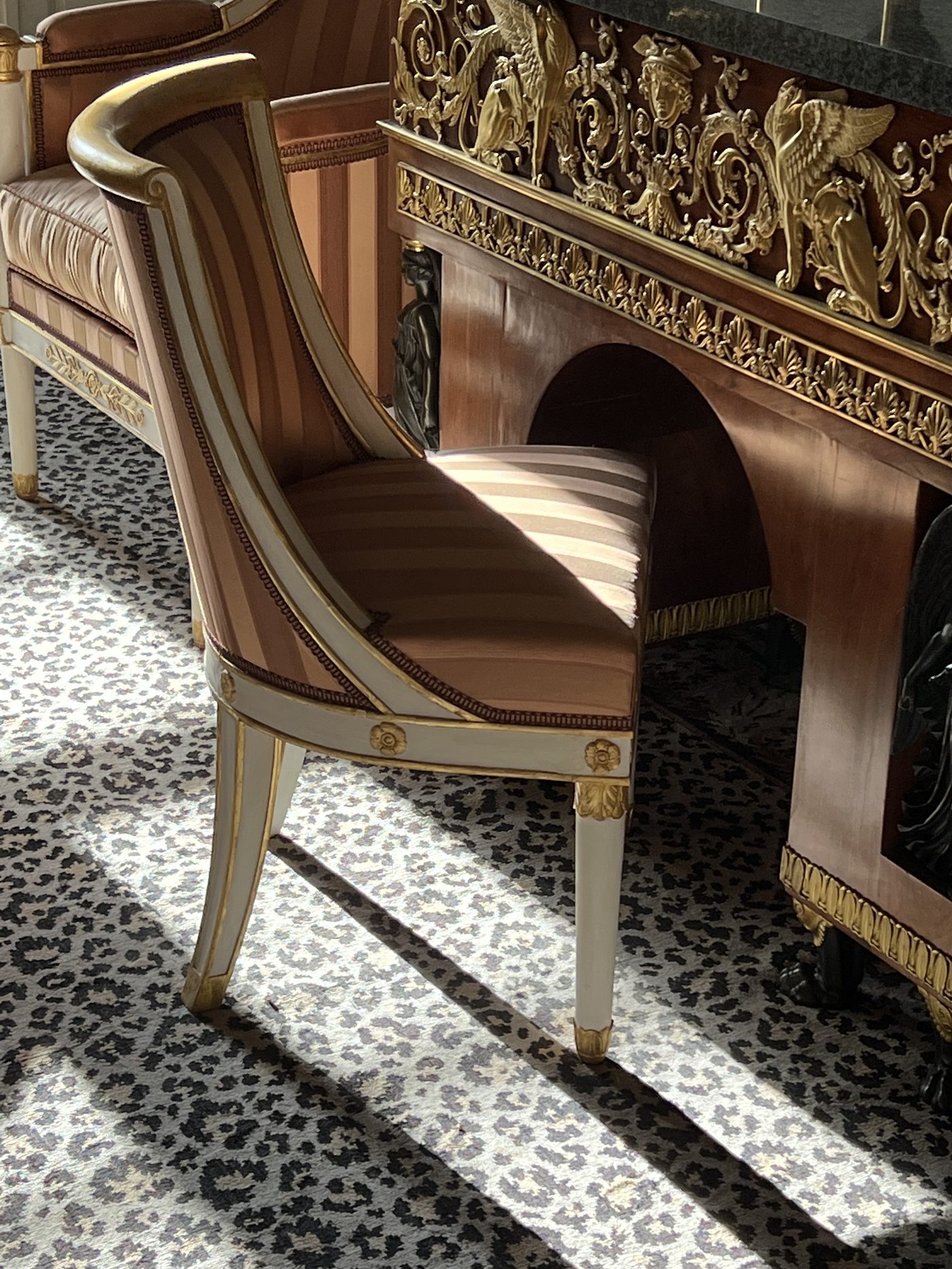
Empire furniture is immediately recognizable for its architectural quality and geometric purity. Pieces are often massive, with forms based on classical prototypes—curule chairs derived from Roman seating, tables with lyre-shaped supports inspired by Greek instruments, and commodes with the proportions of classical temples. Every piece is conceived as architectural sculpture. Ornamentation, where it appears, is reduced to essential classical motifs: laurel wreaths, griffins, sphinxes, and military symbols.

Signature Furniture Elements

  • Monumental forms expressing architectural principles
  • Classical supports: lion paws, caryatids, sphinxes, and columnar legs
  • Lyre and swan motifs derived from classical sources
  • Mahogany as the primary wood, often figured for visual effect
  • Sparse, essential classical ornament rather than elaborate decoration
  • Bronze and ormolu mounts with military and imperial symbols
  • Chairs and sofas with high, straight backs and substantial proportions

The craftsmanship of Empire furniture was extraordinary, though expressed differently than in previous eras. Rather than the intricate marquetry and gilding of Louis XV, emphasis fell on the perfection of form, the quality of wood figuring, and the precise execution of bronze mounts. A single Empire chair might be more impressive than an elaborately decorated Rococo creation because its power came from the perfection of its geometry and the nobility of its proportions. This represented a fundamental reorientation of aesthetic values.

Empire Furniture

Materials & Classical Principles

Empire design represented a deliberate rejection of the precious materials that had defined luxury in previous eras. Rather than exotic veneers and elaborate marquetry, Empire favoured mahogany—selected for its rich, uniform colour and its structural integrity. The beauty of the wood itself, particularly when figured mahogany was employed, provided all necessary visual interest. Gilding was virtually eliminated, replaced by bronze mounts that served both structural and aesthetic purposes. This material restraint was ideologically significant: luxury expressed through quality and proportion rather than material accumulation.

Material Palette

  • Mahogany: Primarily figured mahogany for rich, deep tones
  • Bronze & Ormolu: Substantial mounts with classical and military motifs
  • Stone: Marble tops for commodes and console tables
  • Textiles: Rich fabrics in imperial colours: purple, crimson, deep blue
  • Gilt Details: Applied sparingly to architectural mouldings only
  • Egyptian Elements: Sphinxes and other motifs from Egyptology discoveries

A distinctive feature of Empire design was its incorporation of Egyptology. Following Napoleon's Egyptian campaign, motifs from ancient Egypt—sphinxes, lotus flowers, and pyramidal forms—appeared alongside Greek and Roman references. This eclecticism was theoretically unified by the idea of classical grandeur: all ancient civilizations represented humanity's highest achievements. The technical skill required to execute these designs was immense, particularly in the casting and chasing of bronze mounts and the selection and assembly of figured mahogany.

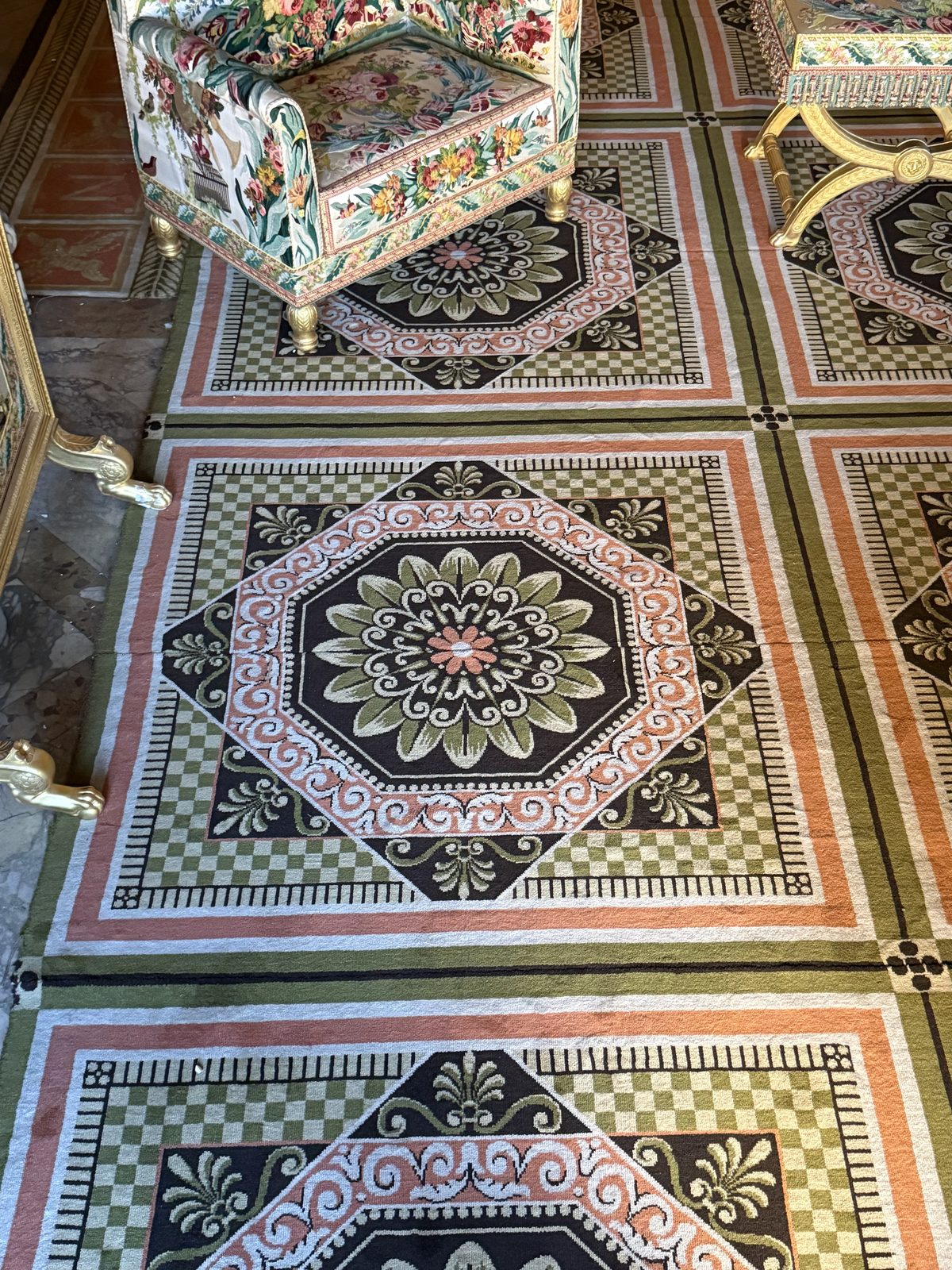
Empire Materials

Colours, Textiles & Imperial Splendour

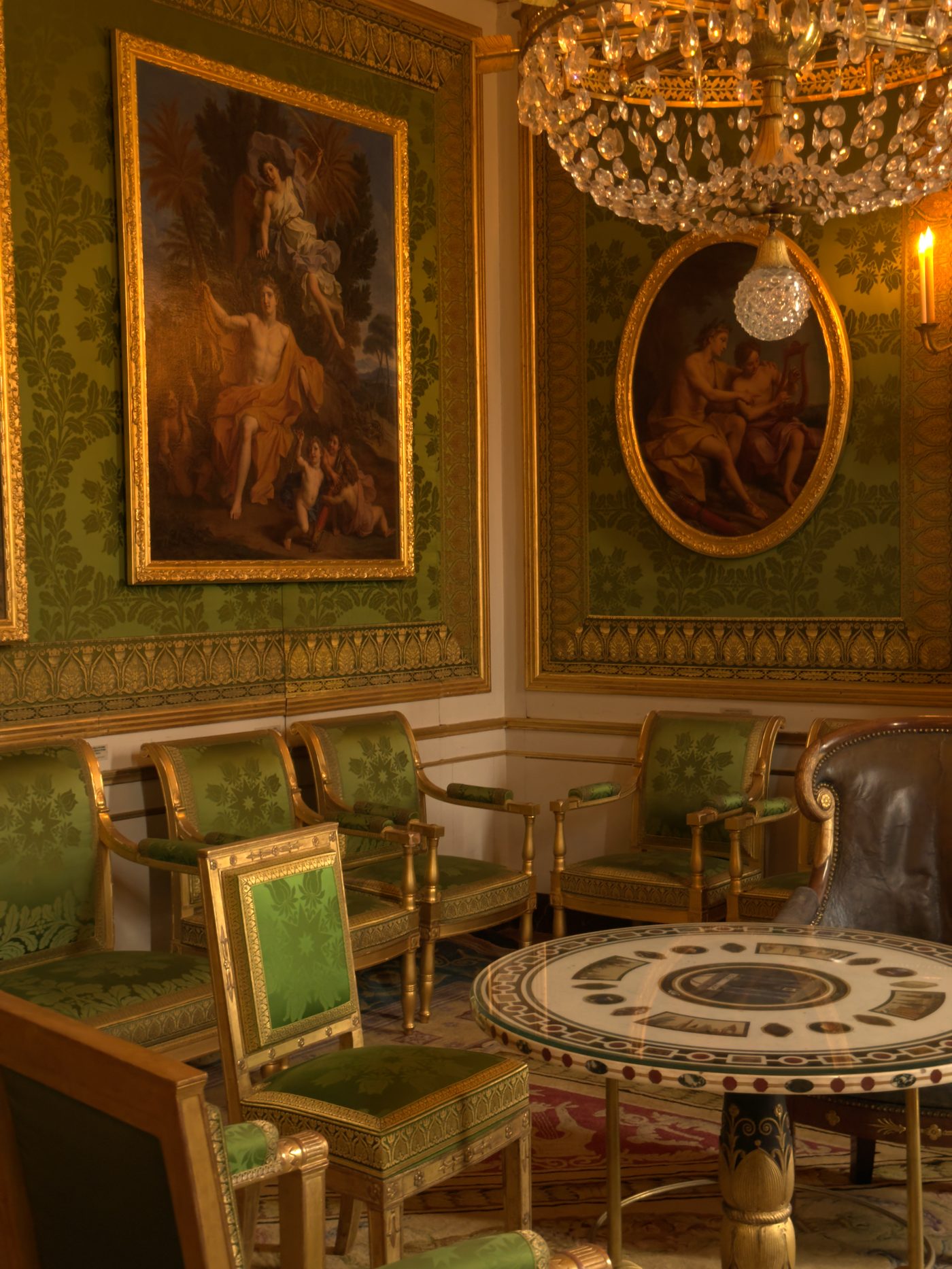
While Empire furniture was restrained, the colour schemes of Empire interiors were bold and imperial. Rich, deep colours dominated: crimson and burgundy evoking power and authority, deep purples suggesting grandeur, rich blues associated with imperial iconography. These colours were applied to walls and upholstery in large, unbroken areas rather than elaborate patterns. The combination of massive mahogany furniture, rich wall colours, and sparse but significant bronze ornaments created interiors of considerable drama and presence.

Characteristic Colour Schemes

  • Deep crimson and burgundy as primary colours conveying power
  • Rich imperial purple for state rooms and formal spaces
  • Deep blue and blue-grey for sophistication and authority
  • Gold and gilding applied selectively to architectural details
  • Creams and pale tones as complementary accents

Textiles in Empire interiors were selected for richness of colour and sophistication of weave rather than elaborate pattern. Damasks, plain silks, and simple striped fabrics dominated. The contrast between the visual richness achieved through colour and the simplicity of pattern represented a fundamental shift in aesthetic values. An Empire room might be visually powerful without being visually busy—power was expressed through colour, proportion, and the presence of significant objects rather than through decorative elaboration. This principle remains influential in contemporary luxury interior design.

Empire Colours

Enduring Legacy & Modern Influence

Although the Empire period lasted only 11 years, its influence extended throughout the 19th century and continues to shape design thinking today. The principles it established—that grandeur could be achieved through proportion and geometry rather than ornamentation, that material quality matters more than material quantity, that classical forms could be adapted to contemporary purposes—remain profoundly relevant. Contemporary design often echoes Empire thinking, particularly in approaches to luxury that emphasize clarity and architectural purity.

What makes Empire design enduringly influential is its confidence. It demonstrated that a new political order could create a new aesthetic language. More importantly, it showed that this language could be both intellectually serious and visually powerful. The style influenced everything from 19th-century British design to contemporary minimalism, whenever designers have chosen clarity over ornament and proportion over decoration.

Modern Principles from Empire Design

  • Expressing luxury through material quality and proportion rather than elaboration
  • Using bold, rich colours as a primary design element
  • Creating dramatic interiors through architectural clarity and geometric form
  • Selecting significant objects rather than filling spaces
  • Combining classical references with contemporary purposes
  • Understanding that constraint and simplicity can be more powerful than excess

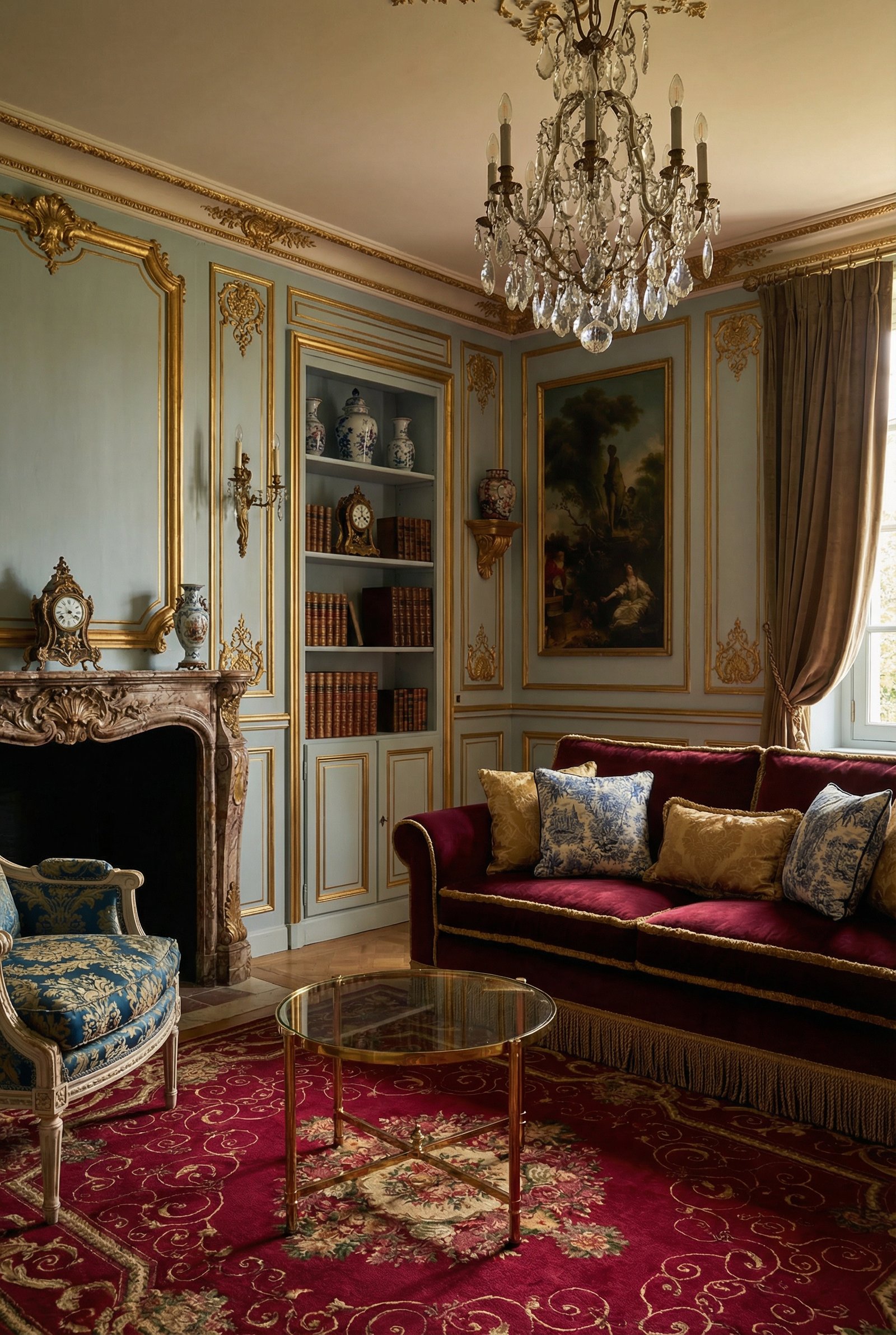
Contemporary reinterpretations of Empire design often focus on its underlying logic: powerful interiors created through the intelligent combination of colour, proportion, and carefully selected objects rather than through elaborate decoration. Modern spaces inspired by Empire might feature rich wall colours, substantial furniture of architectural character, and minimal ornament—creating environments that feel both classical and contemporary. The paradox of Empire style was that its aggressive simplicity proved more enduring than the elaborate ornamentation of previous eras. That lesson remains profound for designers seeking to create interiors with lasting impact.
Contemporary Empire

Read Also in This Series

The Louis XIV Style

The magnificent Baroque grandeur of the Sun King—gilded splendour, overwhelming scale, and the definitive statement of absolute power through interior design.

Discover →

The Régence Style

A transitional bridge between Baroque grandeur and Rococo lightness, the Régence period (1715-1723) introduced greater elegance and informality to interior decoration.

Discover →

The Louis XV Style

The pinnacle of Rococo refinement, Louis XV design celebrates curves, asymmetry, and an intimate aesthetic that revolutionized European taste.

Discover →

The Louis XVI Style

A return to classicism and straight lines, Louis XVI design introduced neoclassical principles while retaining the elegance of the previous century.

Discover →