Louis XV Design
The Rococo Era

The Louis XV Style

1723–1774 — The Height of Elegant Frivolity

Curves, Nature & Intimate Splendour

The Louis XV period marks the apotheosis of the Rococo movement—a 51-year epoch during which French design became synonymous with elaborate ornamentation, curved forms, and a philosophy that placed pleasure and decoration above formal regularity. Also known as the Rococo style, this era represents perhaps the most influential period of French design in European history. From Stockholm to Moscow, from Madrid to Naples, the elegant curves and playful sophistication of Louis XV design became the language of courts and aristocratic houses.

Unlike the absolute grandeur of Louis XIV or the neoclassical restraint that would follow, Louis XV style embraced asymmetry, naturalism, and above all, beauty for its own sake. Rooms were designed as total aesthetic experiences where furniture, wall paneling, and decoration merged into unified compositions that celebrated luxury, comfort, and an almost sensuous appreciation for material beauty. This was design that unapologetically declared: beauty matters.
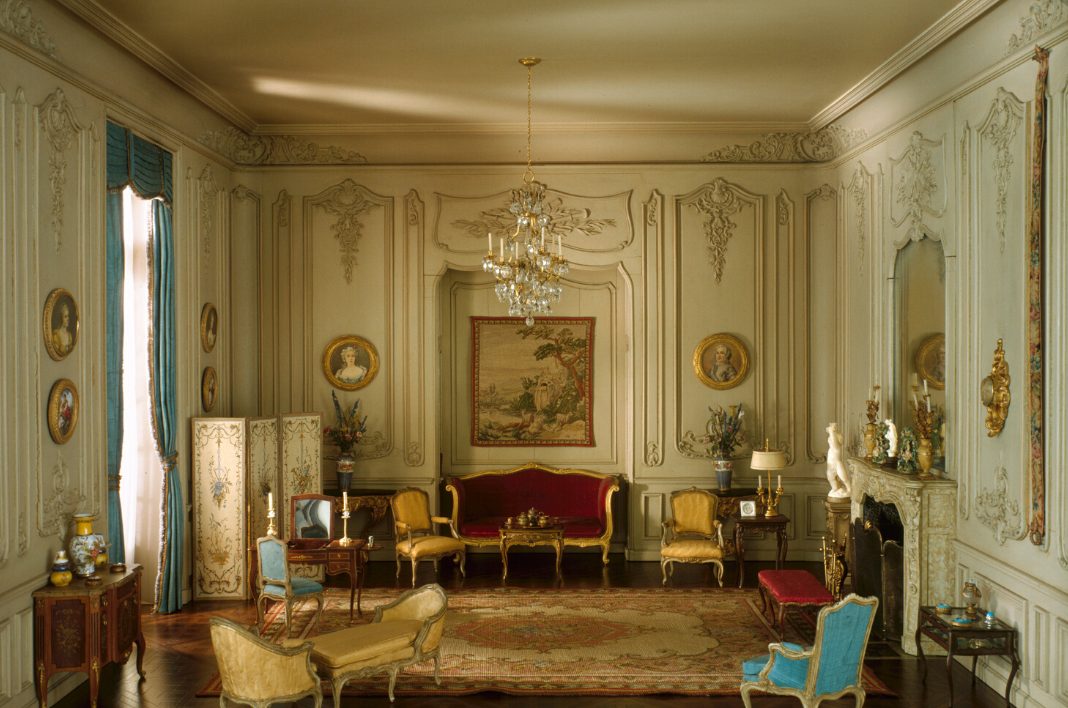
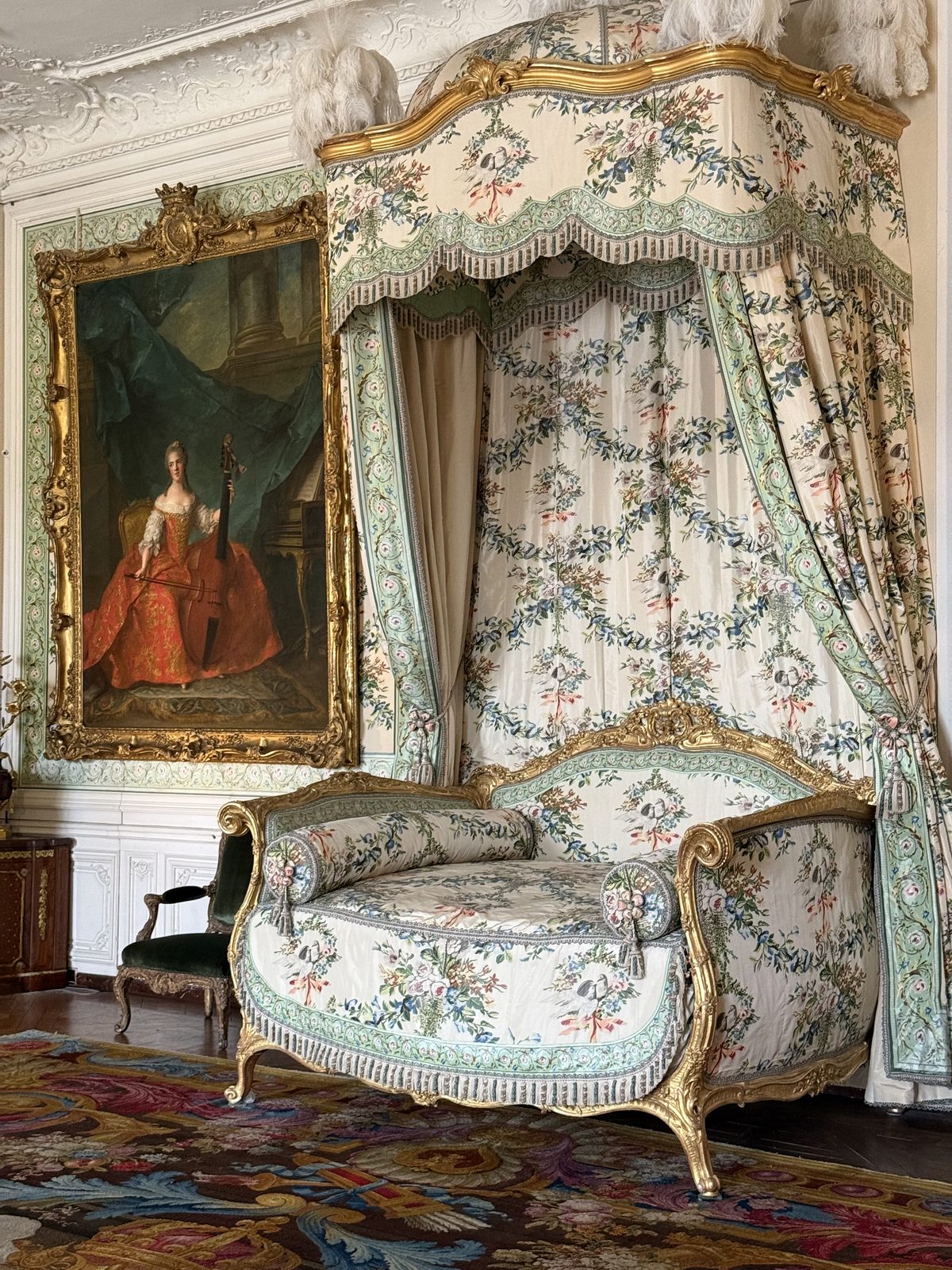
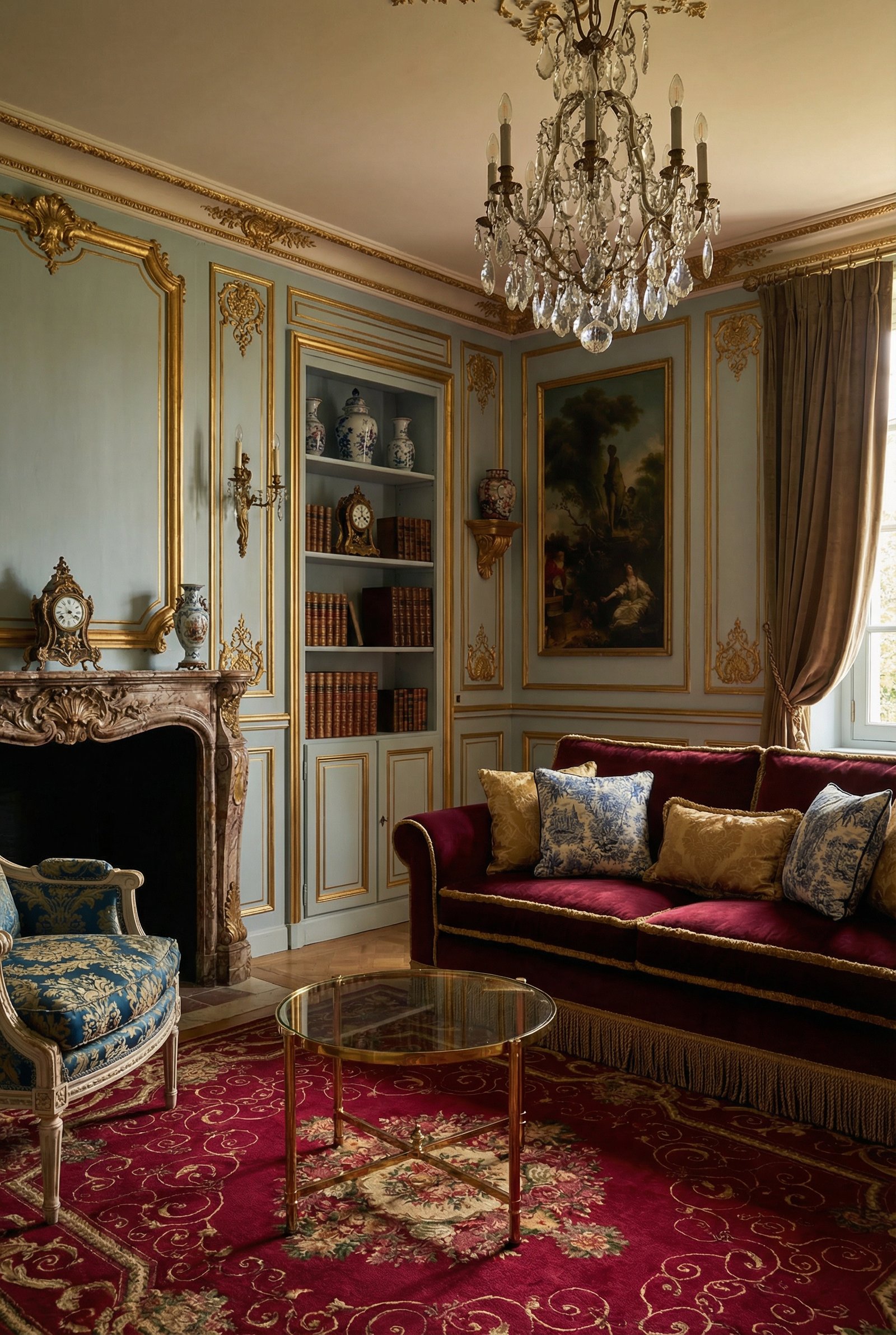
Louis XV Interior

The Age of Enlightenment & Leisure

Louis XV inherited a secure throne and an established kingdom. Unlike his great-grandfather, the young king did not need to prove his power through architecture. Instead, he could enjoy it. This shift in emphasis from display of power to pursuit of pleasure fundamentally altered design priorities. Rooms became smaller, more intimate, and designed primarily for comfort and aesthetic enjoyment rather than ceremonial purposes.

The Rococo style emerged from multiple influences: Italian Baroque traditions, Asian design (through the Chinoiserie craze), and the pastorals and shepherdess fantasies that captivated aristocratic imagination. Master designers like Juste-Aurèle Meissonnier and François de Cuvilliés developed the vocabulary of curves, C-scrolls, and organic forms that defined the era. Every surface—walls, furniture, architectural details—participated in a unified aesthetic language celebrating movement, lightness, and ornamental invention.

Cultural Characteristics of the Era

  • Emphasis on leisure, pleasure, and personal taste
  • Development of new room types for specific social activities
  • Integration of Asian design influences through Chinoiserie
  • Celebration of nature through botanical and animal motifs
  • Sophisticated patronage by aristocratic collectors and connoisseurs

Furniture & Decorative Forms

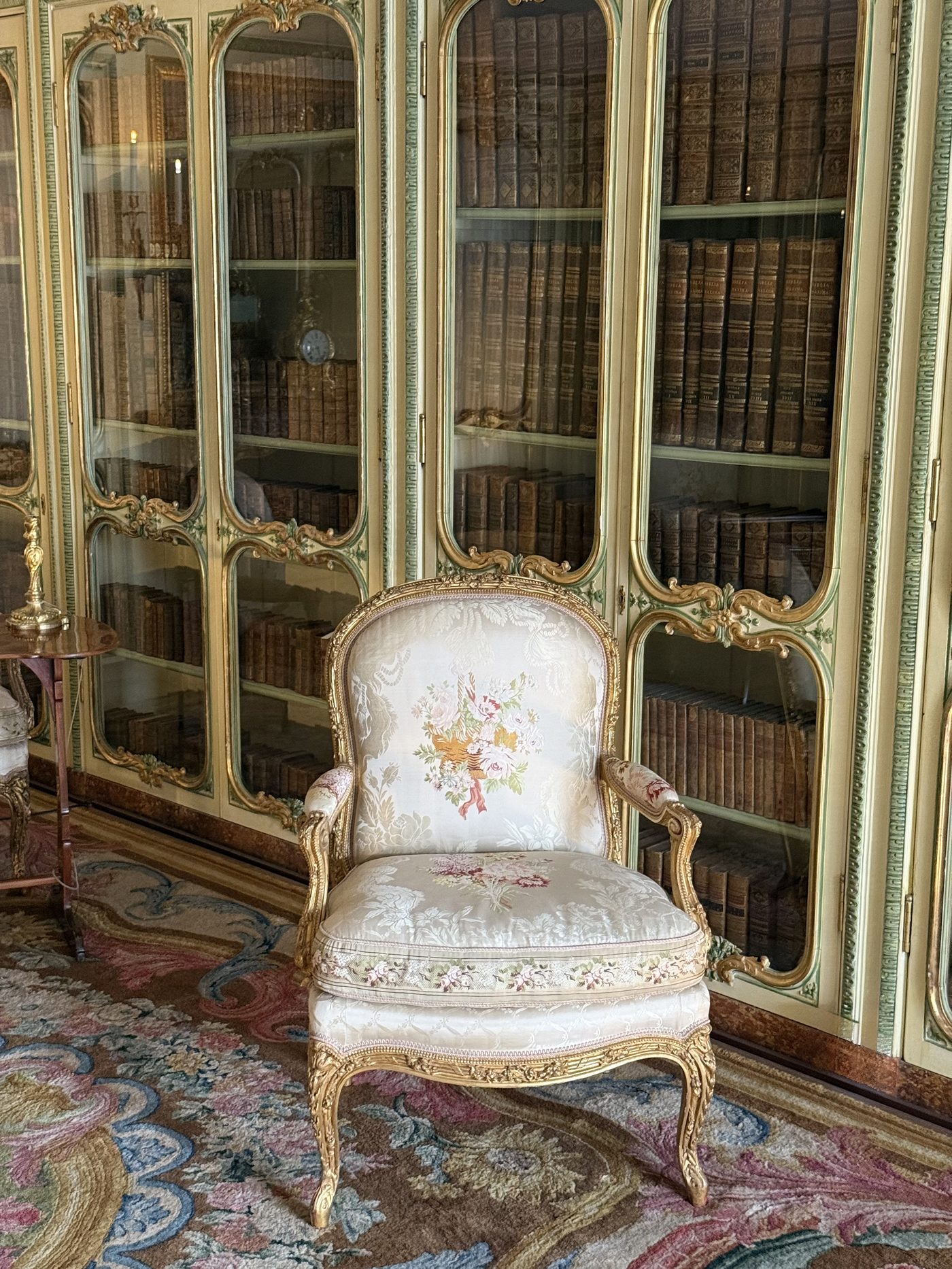
Louis XV furniture represents the ultimate expression of the cabinet-maker's art. Pieces display extraordinary lightness despite their elaborate ornamentation. The cabriole leg evolved to its most refined form—curved, slender, and expressing the very essence of movement. Chairs, tables, and commodes became sculptures in their own right, designed as much for aesthetic contemplation as for function. The integration of form and decoration reached new heights, with ornamental elements expressing structural logic rather than concealing it.

Signature Furniture Elements

  • Perfected cabriole legs with graceful curves and minimal applied ornament
  • Gilded beech frames of extraordinary elegance and proportion
  • Serpentine and asymmetrical forms expressing movement and lightness
  • Elaborate marquetry with intricate geometric and floral patterns
  • Rich upholstery featuring Rococo patterns and pastel colours
  • Specialized furniture forms: bergères, causeuses, voyeuses for conversation
  • Commodes and secretaries with elaborate curved forms and decorative veneers

The craftsmanship was extraordinary—perhaps never surpassed in the history of furniture making. Master craftsmen like Jean-François Leleu and Charles Cressent developed innovative techniques in marquetry, veneer, and gilding. Every piece was a masterwork of technical skill married to aesthetic invention. The comfort of Louis XV furniture also merits attention: chairs provided genuine support while maintaining sculptural elegance, a balance achieved through precise understanding of human ergonomics.

Louis XV Furniture

Materials & Artisanal Innovation

The materials employed in Louis XV design were selected for their visual and tactile qualities. While gilding remained important, it was now applied with greater subtlety, highlighting structural elements rather than overwhelming surfaces. Wood choices became more sophisticated, with different veneers selected for their colour, figure, and visual properties. The combination of kingwood, tulipwood, satinwood, and violet wood created subtle colour effects that had never been attempted before.

Primary Material Innovations

  • Exotic Woods: Kingwood, tulipwood, satinwood, and rosewood in complex geometric patterns
  • Gilding: Applied with greater restraint to highlight carved details and structural logic
  • Marquetry: Elaborate geometric patterns and pictorial scenes using contrasting woods
  • Textiles: Sophisticated damasks, brocades, and petit point in pastel colours
  • Metal: Bronze and ormolu mounts of extraordinary craftsmanship and detail
  • Stone & Marble: Marble tops for commodes and tables, carefully selected for colour and figure

A crucial innovation was the development of ormolu (gilt bronze) hardware and mounting. Rather than simply functional, these elements became integral to the aesthetic—cast and chased with exquisite detail. The coordination between the wood structure, marquetry decoration, and bronze mounts required extraordinary planning and collaboration between different specialized craftsmen. The result was furniture that achieved a level of artistic unity rarely seen before or since.

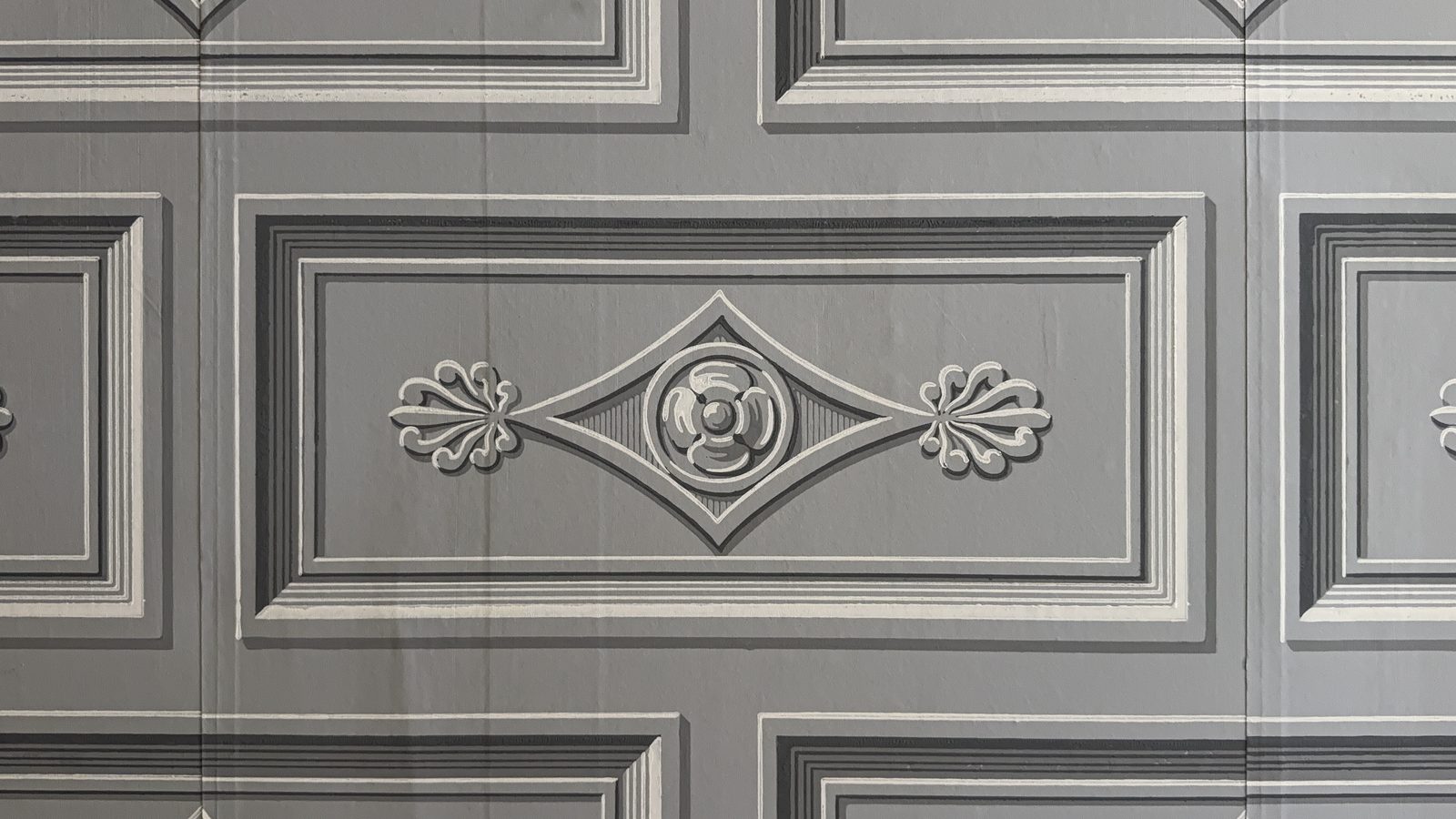
Louis XV Materials

Colours, Textiles & Decorative Schemes

The colour palette of Louis XV interiors represents one of design's most sophisticated achievements. Rather than the deep jewel tones of Louis XIV, this era favoured pale, nuanced colours: soft greens, pale blues, champagne, and creams enriched through carefully orchestrated combinations. Pastel tones dominated, but these were achieved through sophisticated pigments and artistic application rather than simple lightness. The effect was one of elegance, refinement, and almost delicate beauty.

Characteristic Colour Schemes

  • Pale sage green and soft moss green as primary wall colours
  • Sky blue and pale blue-grey for variety and atmosphere
  • Champagne, ivory, and soft pink accents
  • Gold and gilded accents applied with selective restraint
  • Complex multi-coloured compositions in boiserie panels

Textiles played a crucial role in creating the Louis XV interior. Toile de Jouy patterns—depicting pastoral and Chinoiserie scenes—covered walls and furnished upholstery. These were complemented by sophisticated damasks, brocades, and petit point embroidery. The combination of multiple sophisticated patterns created visually rich environments that nonetheless felt elegant rather than overwhelming. Colour coordination across all elements—walls, furnishings, and accessories—was carefully orchestrated to create unified, harmonious interiors of remarkable beauty.

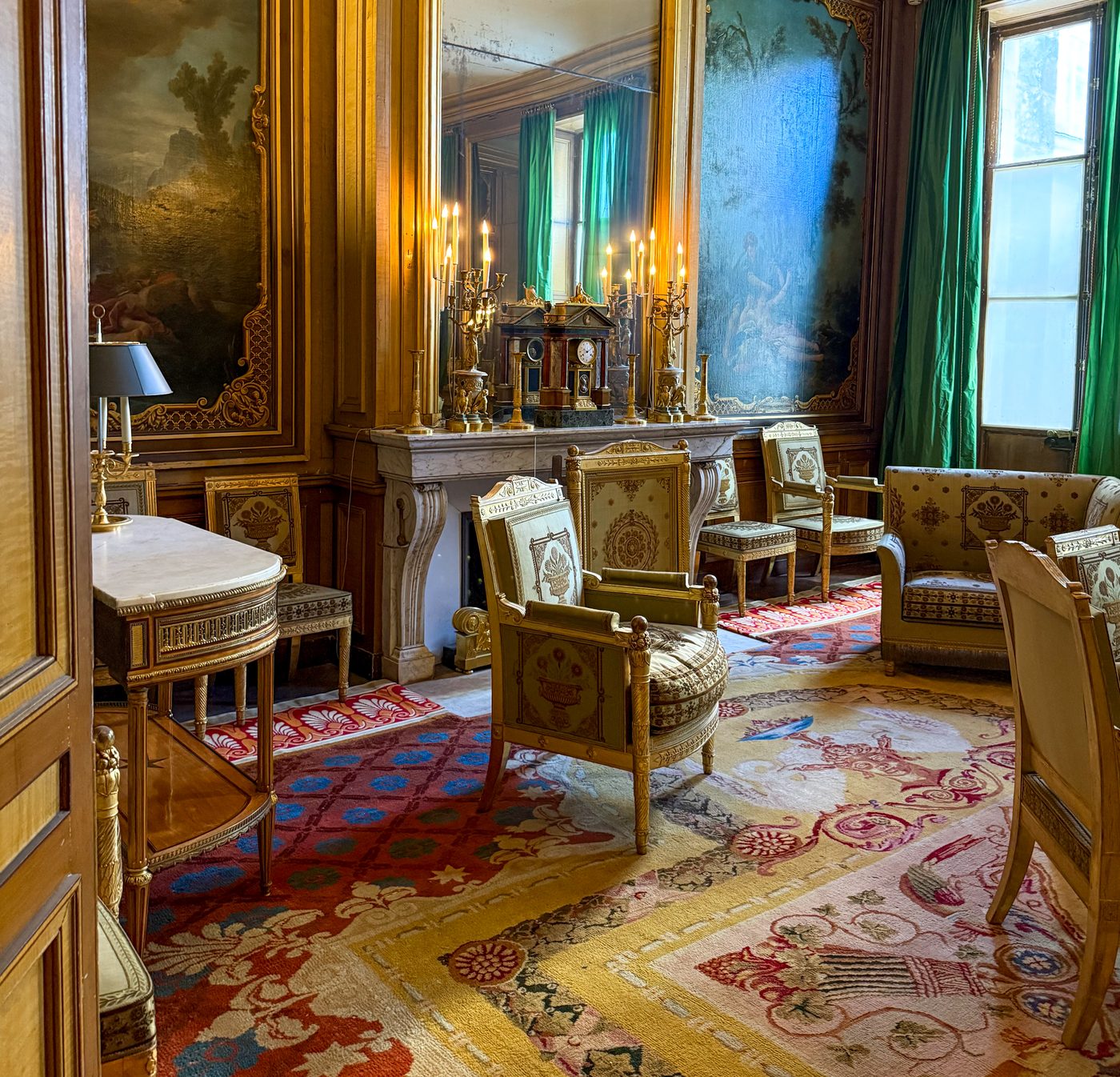
Louis XV Colours

Enduring Influence & Contemporary Reinterpretation

The influence of Louis XV design extended throughout Europe and persisted well into the 19th century. Even as neoclassicism dominated intellectual design discourse, Rococo principles remained embedded in decorative practice. Contemporary designers continually return to Louis XV principles because they offer profound lessons in proportion, colour, and the integration of form and decoration. The style teaches that ornament, when executed with intelligence and restraint, enhances rather than diminishes elegance.

In contemporary design, literal reproduction of Louis XV forms would feel merely historical. Instead, modern applications extract underlying principles: the celebration of curved forms, sophisticated colour coordination, the marriage of materials with decorative intent, and the creation of rooms that engage all senses. A contemporary space inspired by Louis XV might feature curved furniture forms, a refined pastel palette, and decorative details selected for their visual contribution to the whole composition.

Modern Lessons from Louis XV Design

  • Sophisticated colour coordination creates elegance without excess
  • Asymmetry and curves express movement and vitality
  • Multiple pattern combinations can create visual richness if carefully orchestrated
  • Decoration should express structural logic rather than obscure it
  • Comfort and beauty are not incompatible—they enhance each other
  • Attention to material quality and craftsmanship creates lasting elegance

The greatest legacy of Louis XV design may be philosophical rather than stylistic. The period demonstrated that spaces designed purely for pleasure, beauty, and personal enjoyment are not frivolous—they are fundamentally human. The best contemporary design often echoes this principle: creating interiors that delight the eye, comfort the body, and nourish the spirit. In this sense, Louis XV design remains profoundly modern.

Contemporary Louis XV

Read Also in This Series

The Louis XIV Style

The magnificent Baroque grandeur of the Sun King—gilded splendour, overwhelming scale, and the definitive statement of absolute power through interior design.

Discover →

The Régence Style

A transitional bridge between Baroque grandeur and Rococo lightness, the Régence period (1715-1723) introduced greater elegance and informality to interior decoration.

Discover →

The Louis XVI Style

A return to classicism and straight lines, Louis XVI design introduced neoclassical principles while retaining the elegance of the previous century.

Discover →

The Empire Style

Following the Revolution, Empire design drew inspiration from classical antiquity, creating a bold, geometric aesthetic suited to a new political order.

Discover →