Louis XIV Design
The Baroque Era

The Louis XIV Style

1661–1715 — The Age of the Sun King

Absolute Grandeur Reimagined

The reign of Louis XIV, known as the Sun King, fundamentally transformed European interior design. His 72-year tenure witnessed the creation of an architectural and decorative language that celebrated absolute power through unbridled opulence. The Palace of Versailles became the ultimate testament to this vision, and its aesthetic principles permeated every level of French society, influencing taste across Europe and establishing France as the arbiter of luxury and sophistication.

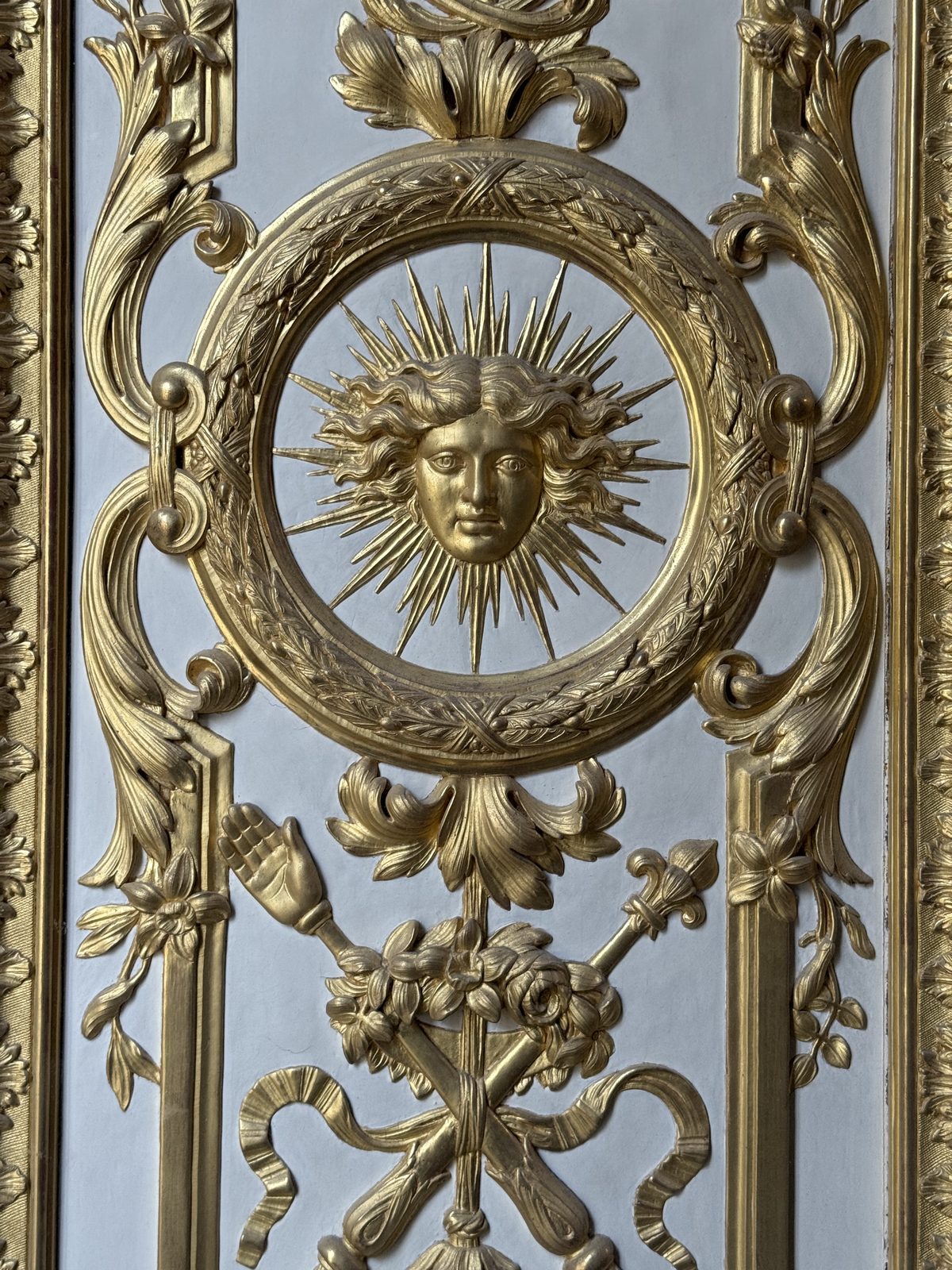
Louis XIV style emerged not simply as a preference for gold and grandeur, but as a deliberate political statement. Every room, every object, every surface became a canvas for displaying the monarch's divine authority. The style represented a revolutionary synthesis of Italian Renaissance principles with French refinement, creating something entirely new: an architecture of power expressed through beauty.

Louis XIV Interior

The Political Roots of Luxury

When Louis XIV ascended the throne in 1643, France emerged from decades of civil turmoil. The young king's strategy was ingenious: by creating an incomparably magnificent court at Versailles, he would centralize power, attract the nobility, and distract them from rebellion through the seductions of luxury. The result was a complete reimagining of what a royal residence could be—transforming architecture into an instrument of state policy.

The style that bears his name draws heavily from Italian Baroque traditions, particularly the opulence of Gian Lorenzo Bernini and Francesco Borromini. However, French designers—notably Charles Le Brun, who served as Louis's artistic director—synthesized these influences with a distinctly French sensibility: greater restraint, more refined proportions, and a commitment to harmony alongside drama. This balance between grandeur and elegance became the defining characteristic of Louis XIV design.

Key Historical Phases

  • Early Period (1661-1680): Formative years; influence of Italian and Flemish traditions
  • Peak Period (1680-1710): Full maturation; completion of Versailles; international influence at its height
  • Late Period (1710-1715): Refinement and consolidation; move toward greater elegance

Furniture & Architectural Forms

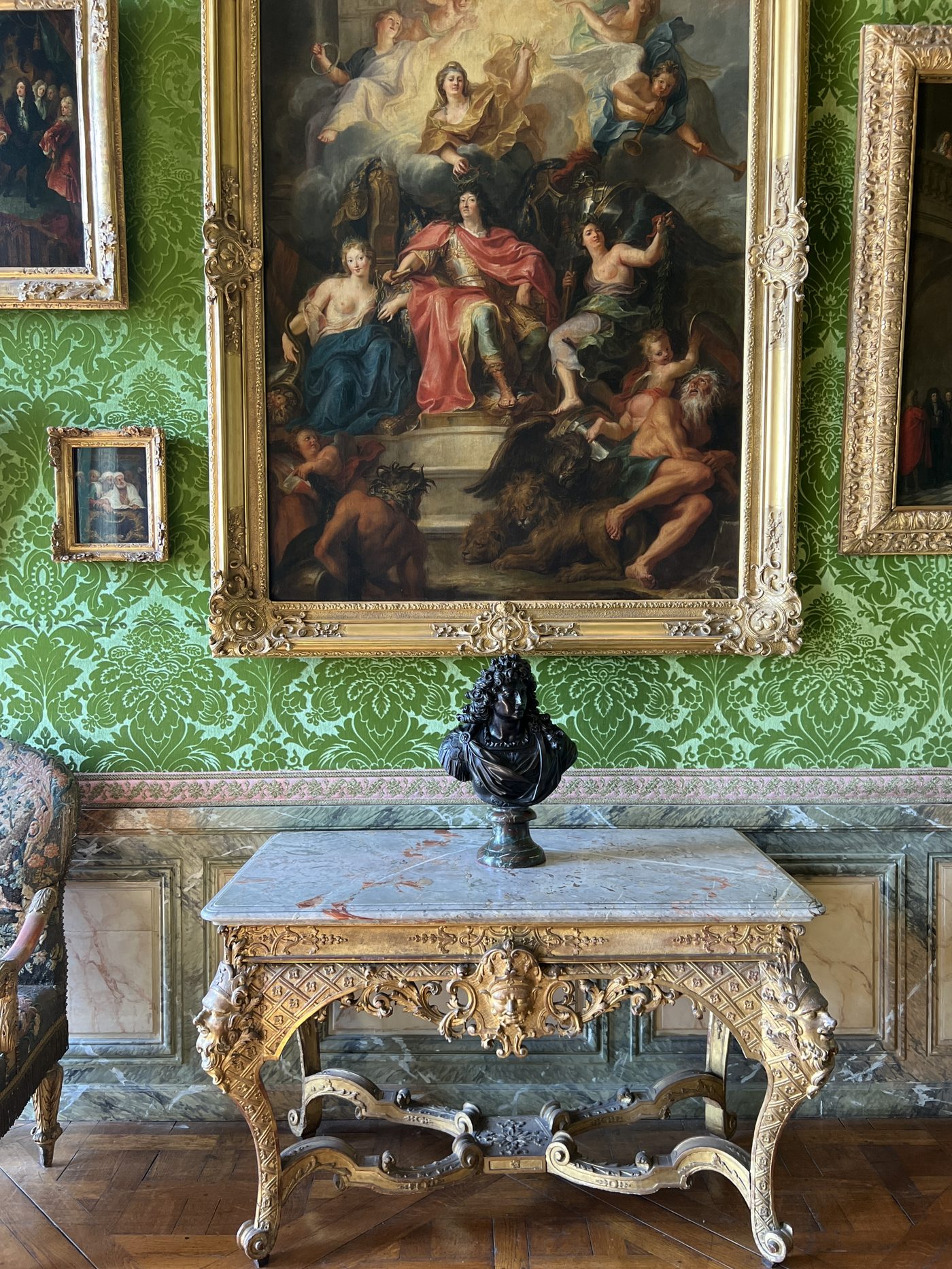
Louis XIV furniture represents an extraordinary achievement in woodworking craftsmanship. Pieces became larger and more imposing than their predecessors, designed to furnish vast palace rooms. Tables and console tables developed elaborate carved and gilded legs, often featuring scrollwork, acanthus leaves, and classical motifs. The cabriole leg, which would dominate 18th-century design, first appeared during this period in more ornate form.

Signature Furniture Elements

  • Highly carved and gilded wooden frames, often walnut or beech gilded throughout
  • Marquetry panels combining exotic veneers: tortoiseshell, ivory, lapis lazuli, and mother-of-pearl
  • Ornate mirrors with gilded frames, often arranged in galleries to multiply and reflect light
  • Imposing fauteuils and settees with elaborate carved cresting and deep upholstery
  • Sculptural pedestals and console tables as standalone works of art
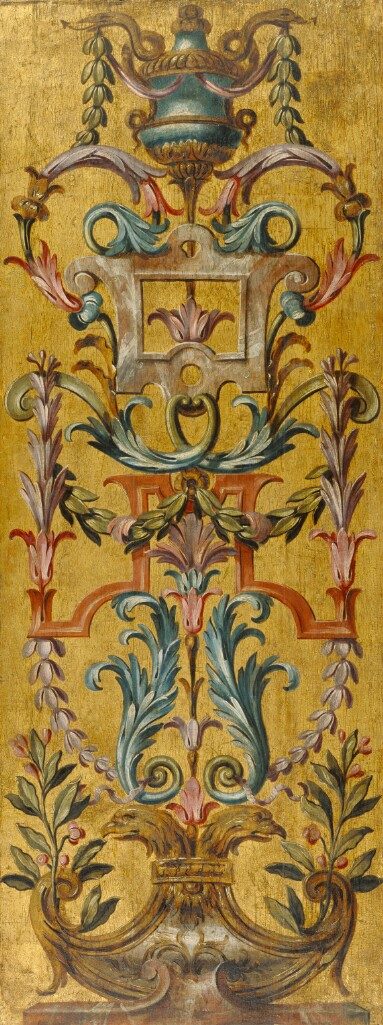
  • Ceiling frescoes and painted panel decorations by master artisans

The craftwork was extraordinary: cabinetmakers like André-Charles Boulle developed innovative techniques in marquetry that combined different materials into intricate patterns. The level of detail was staggering—every surface received attention, and the skill required was immense. These pieces were not merely furniture; they were sculptures meant to convey power and taste through their sheer technical excellence.

Louis XIV Details

Materials & Artisanal Techniques

The materials employed in Louis XIV interiors were selected specifically to convey wealth and power. Gold leaf application was ubiquitous—not merely as decoration but as a fundamental design choice that transformed entire rooms into shimmering landscapes of light and luxury. Every chandelier, mirror frame, and architectural ornament received gold gilding, creating an environment where light bounced endlessly across golden surfaces.

Primary Materials

  • Gold and Gilding: Gold leaf applied to carved wooden surfaces; mercury gilding for superior brilliance
  • Exotic Woods: Walnut, oak, and imported tropical woods for marquetry and veneers
  • Precious Materials: Lapis lazuli, turquoise, coral, and semi-precious stones inlaid into furniture
  • Textiles: Silk damasks, brocades, and Gobelins tapestries in rich jewel tones
  • Marble: Imported marble for fireplaces, columns, and architectural features
  • Stone & Plaster: Elaborate carved stone and plaster ornaments for wall and ceiling decoration

The techniques required to work with these materials were highly specialized. Gilders required years of apprenticeship to master the application of gold leaf. Marquetry workers created intricate geometric patterns by cutting and fitting dozens of different veneers. Upholsterers developed sophisticated methods for creating deep button-tufted seating that remains comfortable while maintaining sculptural form. Every trade represented a pinnacle of technical achievement.

Materials and Details

Colours, Textiles & Atmospheric Effects

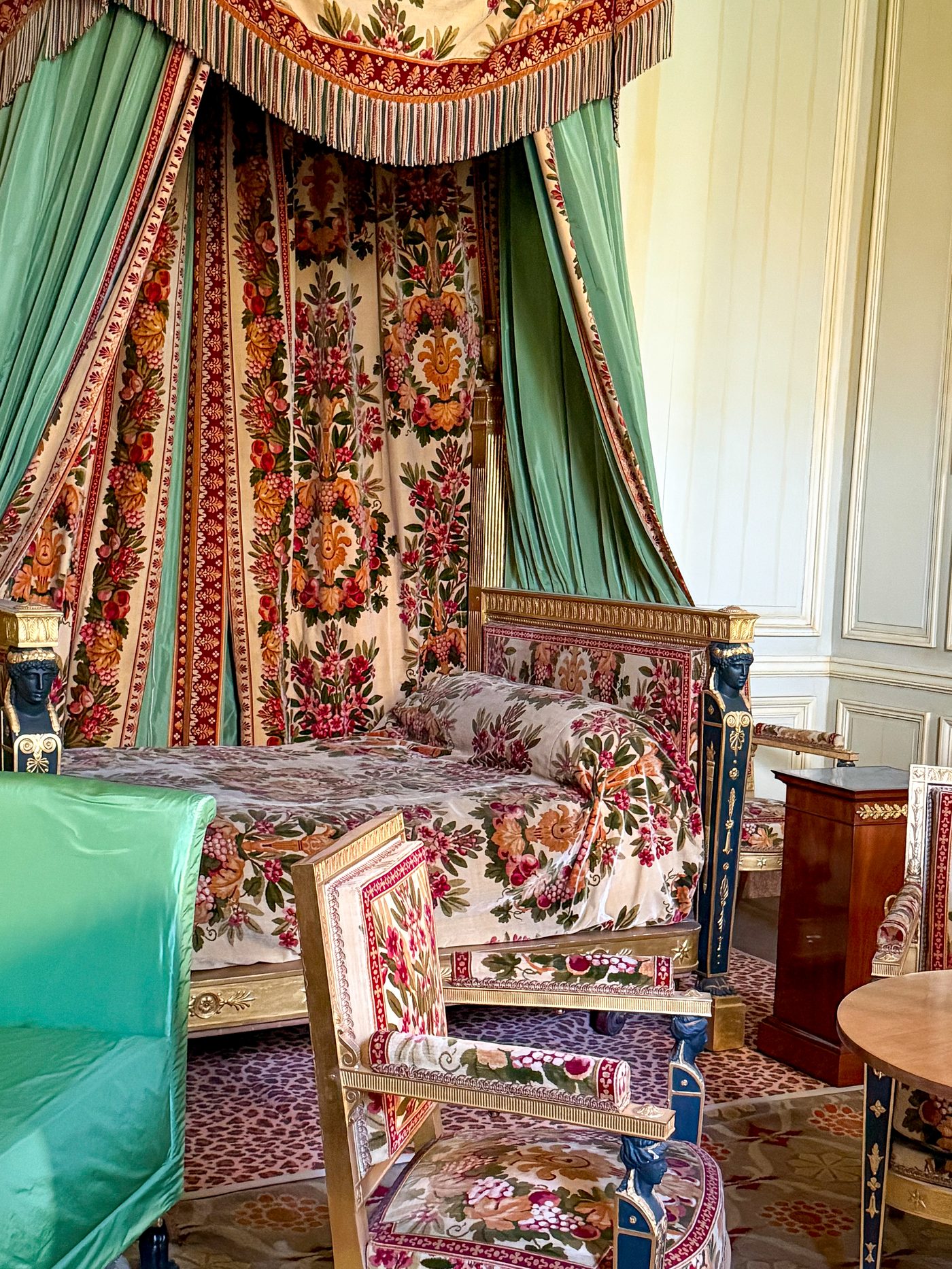
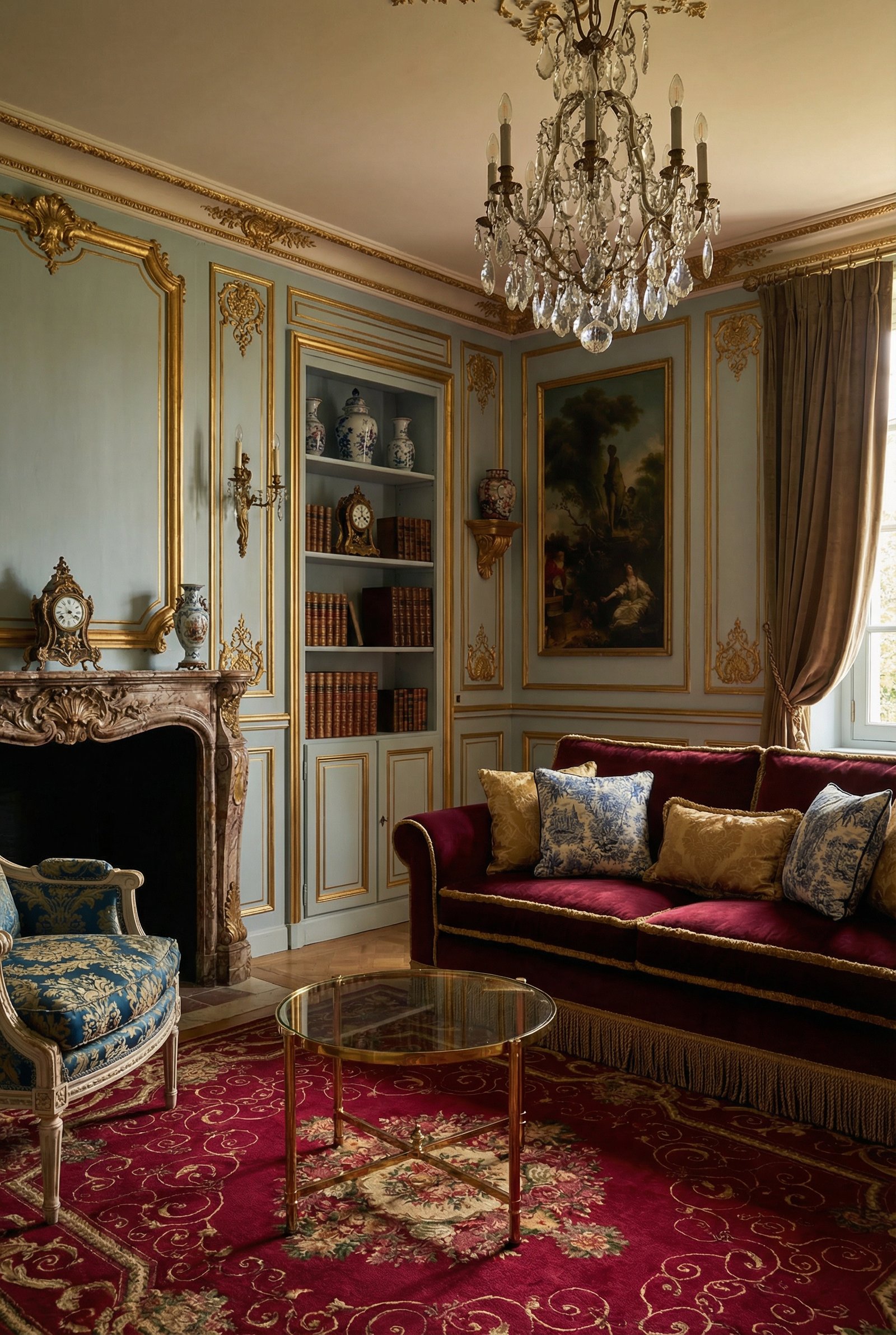
The colour palette of Louis XIV interiors was deliberately sumptuous. Deep jewel tones—crimson, ultramarine blue, emerald green—dominated, often enriched by the application of gold thread in woven fabrics and embroidered details. The combination of these rich colours with abundant gilding created an environment of almost overwhelming luxury. Light played a crucial role: vast mirrors and gilt surfaces caught and amplified candlelight, creating a shimmering, dreamlike atmosphere that was entirely intentional.

Characteristic Colour Scheme

  • Deep crimson and burgundy as primary wall colours
  • Rich royal blues and ultramarine accents
  • Emerald and forest green for secondary spaces and textile details
  • Gold and cream for architectural ornaments and gilded surfaces
  • Ivory and champagne tones for contrast and highlighting

Textiles were considered as important as architecture. Gobelins tapestries, Aubusson carpets, and hand-painted silks covered walls and furnished windows. Upholstery fabrics featured elaborate patterns—often depicting mythological scenes or royal symbols—woven in gold and silver threads. Every fabric was a masterpiece of the textile arts. The atmosphere created was one of overwhelming magnificence: a total aesthetic environment where every surface conveyed absolute power and refined taste.

Colours and Atmosphere

Enduring Legacy & Contemporary Application

The influence of Louis XIV style extended far beyond France and his lifetime. European courts from Vienna to St. Petersburg adopted its principles, making it a foundational language of formal interior design. While 18th-century styles evolved toward greater refinement and lightness, the fundamental principles established under Louis XIV—the marriage of architecture and decoration, the sophisticated use of materials, the creation of unified aesthetic environments—remained dominant throughout the period.

In contemporary design, Louis XIV style offers profound lessons. It demonstrates how historical richness need not feel heavy or dated. Modern reinterpretations focus on the underlying principles: bold colour choices, quality materials, exceptional craftsmanship, and a commitment to creating immersive aesthetic environments. Rather than literal reproduction, contemporary applications extract the spirit—the sense of occasion, the respect for materials, the orchestration of light and colour—and translate it for contemporary sensibilities.

Modern Design Principles from Louis XIV

  • Unified design language across all architectural and decorative elements
  • Investment in exceptional materials and master craftsmanship
  • Sophisticated colour palettes that create distinctive atmospheres
  • Strategic use of gilded accents to create focal points and amplify light
  • Creation of "total design" environments rather than assembled pieces
  • Recognition that luxury lies not in quantity but in quality and intention

Today's most sophisticated interiors often draw quietly from Louis XIV principles while eschewing literal historicism. A contemporary salon might employ deep jewel-tone walls, refined furniture with gilded details, and exceptional textiles—not as period recreation but as a modern language of elegance. The key is understanding that Louis XIV design succeeded because it was fundamentally about creating distinctive, memorable spaces. That ambition remains relevant.
Contemporary Legacy

Read Also in This Series

The Régence Style

A transitional bridge between Baroque grandeur and Rococo lightness, the Régence period (1715-1723) introduced greater elegance and informality to interior decoration.

Discover →

The Louis XV Style

The pinnacle of Rococo refinement, Louis XV design celebrates curves, asymmetry, and an intimate aesthetic that revolutionized European taste.

Discover →

The Louis XVI Style

A return to classicism and straight lines, Louis XVI design introduced neoclassical principles while retaining the elegance of the previous century.

Discover →

The Empire Style

Following the Revolution, Empire design drew inspiration from classical antiquity, creating a bold, geometric aesthetic suited to a new political order.

Discover →